
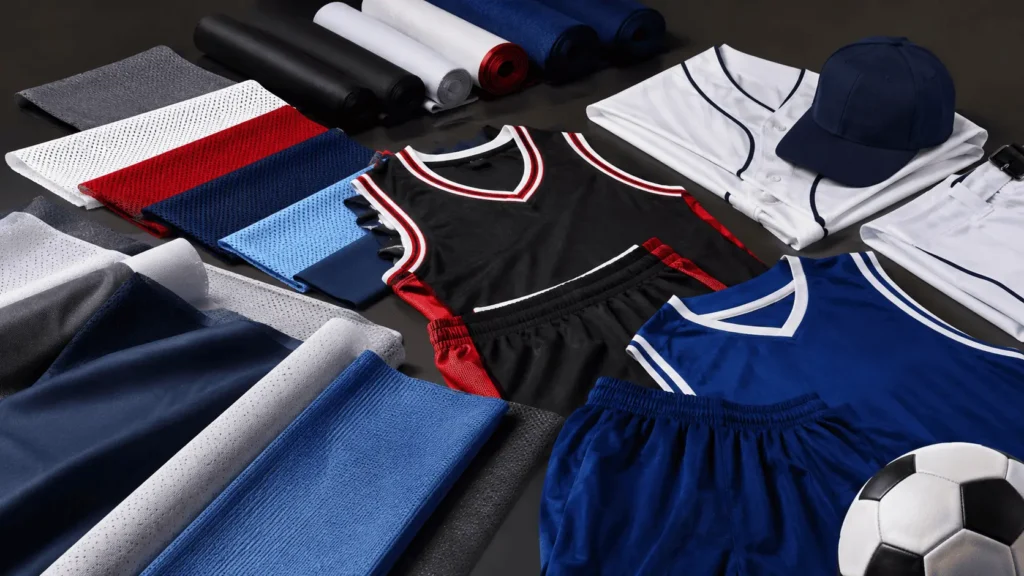
Choosing the right fabric is one of the most important decisions when developing custom sportswear.
A sports uniform may have an impressive design, professional branding, and high-quality construction, but if the fabric is unsuitable for the sport, climate, or level of activity, athletes will notice the difference.
The right fabric can improve comfort, breathability, flexibility, moisture management, durability, and overall performance. For teams, clubs, academies, distributors, and sports brands, fabric selection can also have a major impact on product quality and customer satisfaction.
So, how do you choose the right fabric for custom sportswear?
In this guide, we explain the key factors to consider before selecting fabric for your next custom sportswear order.
1. Start With the Sport
There is no single fabric that is perfect for every sport.
Different sports place different demands on sportswear. A lightweight basketball jersey, for example, has different requirements from an American football uniform or an ice hockey jersey.
Before choosing a fabric, consider how the garment will be used.
Basketball
Basketball uniforms generally require lightweight, breathable fabrics that allow athletes to move freely.
The fabric should provide:
- Good breathability
- Lightweight construction
- Flexibility
- Moisture management
- Comfortable movement
Soccer
Soccer players spend long periods running, so lightweight construction and moisture management are particularly important.
A suitable soccer jersey fabric should help athletes stay comfortable during continuous activity.
Baseball
Baseball uniforms need a combination of comfort, durability, and freedom of movement. Depending on the design, teams may also require fabrics suitable for detailed sublimation or other customization techniques.
American Football
American football uniforms experience significant physical stress and are often worn with protective equipment. Durability, stretch, and strong construction are therefore important considerations.
Rugby
Rugby is a high-contact sport, so fabrics and garment construction need to withstand pulling, stretching, and repeated physical contact.
Ice Hockey
Ice hockey uniforms have different requirements because they are worn over protective equipment. Durable construction, appropriate weight, and fit are important factors.
The first question to ask is therefore simple:
What sport is the uniform being designed for?
2. Consider Breathability
During exercise, the body generates heat. A breathable fabric allows air to move through the garment, helping athletes remain more comfortable during physical activity.
Breathability is particularly important for:
- Outdoor sports
- Warm climates
- High-intensity training
- Long competitions
- Team sports involving continuous movement
A fabric that does not breathe well can feel heavy and uncomfortable when an athlete begins to sweat.
When selecting custom sportswear fabric, ask your manufacturer about the fabric’s construction and breathability characteristics rather than judging it solely by appearance.
3. Look for Good Moisture Management
Sweat management is another major consideration.
Modern performance sportswear is often designed to move moisture away from the skin and allow it to evaporate more efficiently.
This can help the garment feel lighter and more comfortable during intense activity.
Moisture-management fabrics are particularly useful for sports such as:
- Soccer
- Basketball
- Running
- Volleyball
- Baseball
- Training
- Fitness
However, moisture management should be considered alongside other factors such as fabric weight, stretch, breathability, and durability.
4. Choose the Right Fabric Weight
Fabric weight affects how a garment feels and performs.
Lightweight fabrics can be excellent for sports where athletes need maximum freedom of movement and ventilation.
Heavier fabrics may be appropriate when greater durability, structure, or warmth is required.
For example:
Lightweight fabrics:
Often suitable for basketball jerseys, soccer shirts, training tops, and warm-weather sportswear.
Medium-weight fabrics:
Can provide a balance between durability, comfort, and performance for many types of teamwear.
Heavier fabrics:
May be more suitable for garments designed for colder environments or physically demanding applications.
The ideal weight depends on the sport, garment type, climate, and intended use.
5. Think About Stretch and Flexibility
Athletes rarely remain still.
Running, jumping, turning, throwing, tackling, and stretching all require freedom of movement.
That is why fabric flexibility is an important part of sportswear design.
A suitable fabric should allow the garment to move with the athlete rather than restricting their range of motion.
Stretch characteristics are particularly important for:
- Compression wear
- Training wear
- Performance tops
- Leggings
- Rugby
- American football
- Fitness apparel
The amount of stretch required will depend on the specific garment.
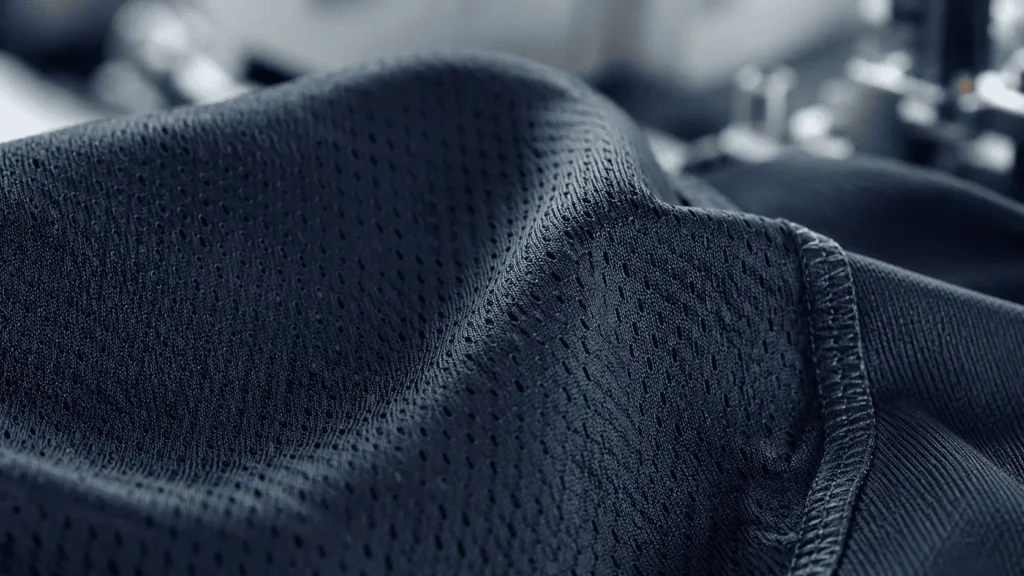
6. Consider Durability
Sportswear is exposed to repeated use, washing, friction, stretching, and physical activity.
A fabric that performs well initially but deteriorates quickly may not provide good long-term value.
When evaluating fabric durability, consider:
- Resistance to abrasion
- Seam performance
- Shape retention
- Color retention
- Resistance to repeated washing
- Resistance to stretching
- Overall fabric strength
For teamwear, durability is especially important because uniforms may be worn throughout an entire season.
A professional custom sportswear manufacturer should be able to recommend fabric options based on how frequently and intensely the garments will be used.
7. Consider the Climate
Climate can dramatically influence fabric selection.
A uniform designed for a hot outdoor environment may require different characteristics from one designed for cold-weather training.
Hot and humid conditions
Prioritize:
- Breathability
- Lightweight construction
- Moisture management
- Fast drying
- Airflow
Cold conditions
Consider:
- Thermal properties
- Layering
- Fabric weight
- Wind protection
- Insulation
Variable conditions
For teams that play throughout different seasons, layering systems and versatile performance fabrics may be more appropriate.
The best sportswear fabric is not simply the one with the most features. It is the one that matches the environment in which the garment will be used.
8. Check How Well the Fabric Works With Customization
Custom sportswear is not just about the fabric. It also needs to support the team’s visual identity.
Before selecting a material, consider how well it works with your chosen customization method.
Common customization techniques include:
- Sublimation
- Screen printing
- Heat transfer
- Embroidery
- Patches
- Heat-applied graphics
Sublimation is particularly popular for many custom sports uniforms because it can allow detailed designs, gradients, patterns, numbers, and team branding to become part of the garment’s visual surface.
However, the appropriate decoration method depends on the fabric composition and garment construction.
Always discuss the intended design with your manufacturer before finalizing the fabric.
9. Don’t Ignore Comfort
Performance is important, but comfort matters just as much.
Athletes may wear uniforms for training sessions, matches, tournaments, travel, and other activities. The fabric should therefore feel comfortable against the skin and work well with the garment’s overall construction.
Consider:
- Softness
- Weight
- Flexibility
- Breathability
- Seam placement
- Moisture management
- Overall fit
A technically advanced fabric is not necessarily the best option if it creates an uncomfortable garment.
The best custom sportswear combines performance and comfort.
10. Think About Maintenance
Sports uniforms are washed frequently, so maintenance should be considered before production.
Ask how the fabric performs after repeated washing.
A good sportswear fabric should ideally maintain:
- Its shape
- Its color
- Its structure
- Its graphics
- Its overall appearance
Teams should also receive appropriate washing and care instructions from their manufacturer.
Proper care can significantly extend the useful life of sportswear.
11. Fabric Composition Matters
Different fibers offer different characteristics.
Polyester
Polyester is widely used in sportswear because it can provide a useful combination of durability, lightweight construction, moisture management, and color retention.
It is commonly used for team jerseys, training wear, and performance garments.
Nylon
Nylon can provide excellent strength and abrasion resistance. It is useful in applications where durability is particularly important.
Elastane
Elastane is valued for its stretch and recovery properties. It is often blended with other fibers when greater flexibility is required.
Polyester Blends
Blending polyester with other fibers can help manufacturers balance different characteristics such as comfort, stretch, durability, and performance.
The important point is that fabric composition should be selected according to the garment’s purpose, rather than simply choosing a material because it is commonly used.
12. Ask Your Manufacturer for Fabric Samples
One of the best ways to make a confident decision is to physically evaluate fabric samples before placing a large production order.
A sample can help you assess:
- Fabric thickness
- Stretch
- Softness
- Breathability
- Weight
- Texture
- Color
- Print quality
- Overall appearance
If possible, wear or test the sample during physical activity.
For larger teamwear or sportswear projects, this step can help prevent expensive mistakes during bulk production.
A professional manufacturer should be willing to discuss fabric options and help match the material to your requirements.
Fabric Selection by Sportswear Type
Different garments may benefit from different fabric characteristics.
| Sportswear Type | Important Fabric Characteristics |
|---|---|
| Basketball Uniforms | Lightweight, breathable, flexible |
| Soccer Uniforms | Lightweight, moisture-managing, breathable |
| Baseball Uniforms | Durable, comfortable, flexible |
| American Football Uniforms | Durable, stretch, strong construction |
| Rugby Uniforms | Durable, strong, flexible |
| Ice Hockey Uniforms | Durable, structured, suitable for layering |
| Training Wear | Breathable, flexible, moisture-managing |
| Compression Wear | Stretch, recovery, supportive fit |
| Activewear | Comfortable, breathable, flexible |
This is only a general guide. The final fabric selection should take into account the specific garment design, climate, athlete requirements, and manufacturing method.
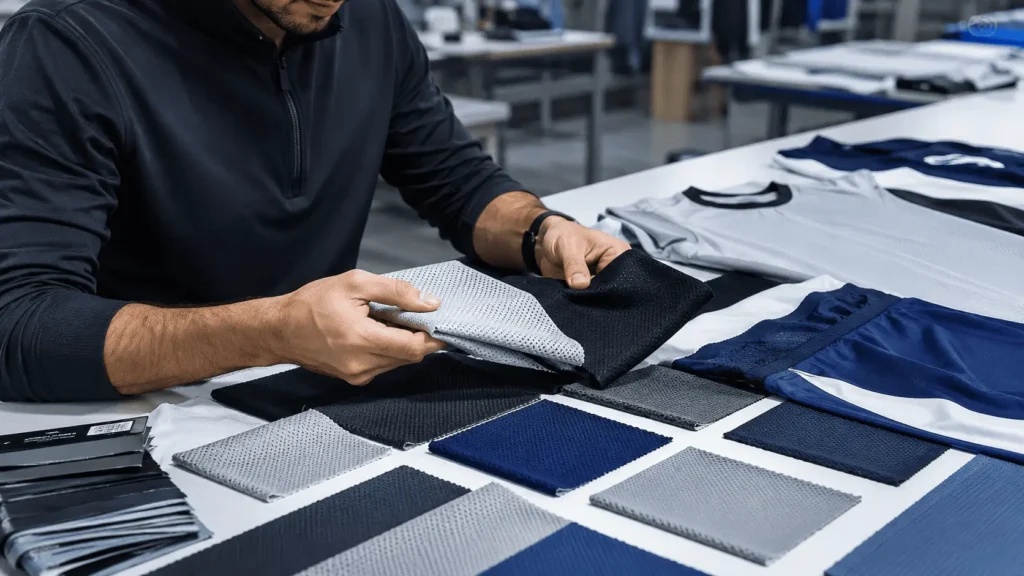
How to Choose the Right Fabric With Your Manufacturer
When working with a custom sportswear manufacturer, provide as much information as possible before fabric selection.
Tell your manufacturer:
- What sport the garment is for.
- Where the garment will be used.
- Whether it is for training or competition.
- The expected climate.
- How frequently it will be washed.
- Your preferred level of stretch.
- Your desired weight and feel.
- The customization method you want.
- Your required durability.
- Your target price range.
With this information, the manufacturer can recommend fabrics that better match the project’s requirements.
Common Mistakes When Choosing Sportswear Fabric
Choosing Based Only on Price
The cheapest fabric may not provide the performance or durability your team needs.
Instead, consider the total value of the garment over its expected lifespan.
Choosing Fabric Based Only on Appearance
A fabric can look excellent but still perform poorly during intense activity.
Always consider technical characteristics as well as appearance.
Using the Same Fabric for Every Sport
Different sports have different requirements.
A fabric that works well for a soccer jersey may not be the best choice for rugby or American football.
Skipping Samples
Bulk production without evaluating the fabric first can lead to avoidable problems with fit, feel, color, printing, or performance.
Ignoring Washing Requirements
Sports uniforms are washed frequently. Always consider how the fabric and customization will perform after repeated washing.
The Right Fabric Makes a Difference
Choosing fabric for custom sportswear is ultimately about finding the right balance.
The ideal material should match the sport, environment, garment design, athlete requirements, customization method, and expected lifespan.
There is no universal “best sportswear fabric.”
Instead, there is a best fabric for a specific application.
That is why working with an experienced sportswear manufacturer can make the selection process much easier.
Custom Sportswear Manufacturing With Nuto Sports
At Nuto Sports, we understand that fabric selection is an important part of creating high-quality custom sportswear.
From team uniforms to performance apparel, the right material can influence comfort, appearance, durability, and overall performance.
When developing your next custom sportswear collection, don’t choose fabric based on appearance or price alone.
Consider performance, comfort, durability, climate, customization, and intended use.
The right fabric is the foundation of a better sportswear product.
Choose the material for the sport. Build the garment for the athlete. Manufacture it for performance.